MENTAL HEALTH
When Fear Knocks: Finding Calm in a Restless World
Oct 29, 2025
|
7
min read

Fear Lives in Every Heartbeat
That flutter when you check your bank balance.
The silence that stretches too long after an argument.
The unease before a doctor’s call, or the quiet thought—what if this peace doesn’t last?
Fear doesn’t always roar. Sometimes, it whispers through ordinary days, shaping choices without our notice. It appears when bills rise, when a dream stalls, when love feels distant, or even when everything is finally going well.
You are not weak for feeling fear. You are human.
The Science Behind the Shadow
Fear is ancient—wired deep into our biology.
The amygdala, our brain’s internal alarm, evolved to protect us. It fires at any sign of danger—real or imagined. The problem? In modern life, the “threats” aren’t tigers in the dark; they’re unread emails, uncertain futures, and unmet expectations.
When this alarm stays on too long, it drains us—tightening muscles, stealing sleep, and clouding thought.
But this is not failure; it’s a system doing its job. The skill lies in learning when to listen, and when to let go.
The Spiritual Root of Fear
Spiritually, fear grows from illusion—our illusion of control and permanence.
We grasp at things—success, youth, health, affection—as if holding them tightly could make them stay. But life is fluid. The tighter the grip, the sharper the pain when change arrives.
Fear is not just the noise of danger; it’s the cry of attachment.
When we remember that nothing truly ours can be lost, fear begins to soften.
What remains is peace—the quiet awareness beneath every storm.
When the Storm Breaks
Loss, illness, betrayal, or sudden change can pull the ground from beneath our feet. When fear surges, logic fades. The mind spins endless “what-ifs.”
Here’s how to return to calm when life feels unsteady:
Name it.
Say, “I feel fear,” instead of “Everything is falling apart.” Naming emotion reduces its hold.Breathe with awareness.
Inhale for 4 counts, exhale for 6. Repeat gently. Every long exhale tells the body, You are safe now.Stay present.
Focus on the next right step. Drink water. Make one call. Rest your eyes. Fear lives in imagined tomorrows—peace lives now.Anchor in your body.
Press your feet to the floor, loosen your shoulders. The body is the bridge back to safety.Surrender control.
Say softly, “I don’t know what’s next, but I will meet it fully.”
That humility is not defeat—it is strength in its purest form.
When Life Is Calm
Strangely, fear often grows loudest when life is peaceful.
We begin to guard our joy as though it were fragile. We worry that happiness will slip away.
Instead of bracing for loss, learn to receive peace fully:
Notice the present. Feel the warmth of sunlight, the scent of your morning tea, the laughter in a familiar voice.
Be specific with gratitude. Say, “I’m thankful for the softness of this moment,” not just “I’m grateful.”
Practice gentle letting go. Release one small attachment each week—a rigid plan, a judgment, an expectation. It teaches the heart how to trust change.
Remember who you are. You are not your role, your income, or your reflection. You are the awareness behind all of it.
Peace is not fragile—it’s your natural state, remembered through stillness.
Simple Practices to Transform Fear
The Three-Breath Reset
Notice where fear lives in your body.
Soften that area by ten percent.
Ask yourself: What is actually happening right now?
The Circle of Control
Focus on what truly belongs to you:
Your choices: words, actions, care.
Your influence: honest requests, boundaries.
Not yours: others’ reactions, outcomes.
Peace begins where control ends.
The Compassion Check-In
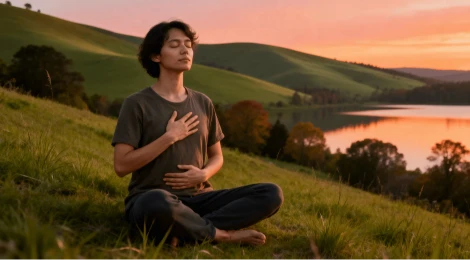
Hand to heart. Whisper: “This is hard.”
Ask, “What do I need—rest, clarity, comfort?”
Then meet that need with one small act of kindness.
The Evening Reflection
Before bed, note:
One fear you faced.
One action you took.
One truth you learned.
Fear fades when we keep a record of our own courage.
Building Steadiness for the Long Road
Resilience isn’t inherited—it’s trained. Each conscious breath, each honest pause, each quiet act of courage strengthens your inner foundation.
Move your body daily. Sleep deeply. Share openly. Surround yourself with people who let you be real.
Isolation feeds fear; connection dissolves it.
And through it all, keep returning to awareness—the calm witness inside you that no storm can shake. You are larger than your thoughts. You are the sky; fear is just the weather.
The Gift Hidden Inside Fear
Fear is not the enemy—it’s a messenger with imperfect data.
It points to what matters most: the people we love, the values we hold, the truths we’ve forgotten.
When we stop fighting fear and begin listening, it transforms.
Science steadies the body.
Spirit opens the heart.
Together, they guide us home.
Fear will visit—but it doesn’t have to stay.
When you meet it with breath, gratitude, and grace, you don’t become fearless.
You become free.
Fear Lives in Every Heartbeat
That flutter when you check your bank balance.
The silence that stretches too long after an argument.
The unease before a doctor’s call, or the quiet thought—what if this peace doesn’t last?
Fear doesn’t always roar. Sometimes, it whispers through ordinary days, shaping choices without our notice. It appears when bills rise, when a dream stalls, when love feels distant, or even when everything is finally going well.
You are not weak for feeling fear. You are human.
The Science Behind the Shadow
Fear is ancient—wired deep into our biology.
The amygdala, our brain’s internal alarm, evolved to protect us. It fires at any sign of danger—real or imagined. The problem? In modern life, the “threats” aren’t tigers in the dark; they’re unread emails, uncertain futures, and unmet expectations.
When this alarm stays on too long, it drains us—tightening muscles, stealing sleep, and clouding thought.
But this is not failure; it’s a system doing its job. The skill lies in learning when to listen, and when to let go.
The Spiritual Root of Fear
Spiritually, fear grows from illusion—our illusion of control and permanence.
We grasp at things—success, youth, health, affection—as if holding them tightly could make them stay. But life is fluid. The tighter the grip, the sharper the pain when change arrives.
Fear is not just the noise of danger; it’s the cry of attachment.
When we remember that nothing truly ours can be lost, fear begins to soften.
What remains is peace—the quiet awareness beneath every storm.
When the Storm Breaks
Loss, illness, betrayal, or sudden change can pull the ground from beneath our feet. When fear surges, logic fades. The mind spins endless “what-ifs.”
Here’s how to return to calm when life feels unsteady:
Name it.
Say, “I feel fear,” instead of “Everything is falling apart.” Naming emotion reduces its hold.Breathe with awareness.
Inhale for 4 counts, exhale for 6. Repeat gently. Every long exhale tells the body, You are safe now.Stay present.
Focus on the next right step. Drink water. Make one call. Rest your eyes. Fear lives in imagined tomorrows—peace lives now.Anchor in your body.
Press your feet to the floor, loosen your shoulders. The body is the bridge back to safety.Surrender control.
Say softly, “I don’t know what’s next, but I will meet it fully.”
That humility is not defeat—it is strength in its purest form.
When Life Is Calm
Strangely, fear often grows loudest when life is peaceful.
We begin to guard our joy as though it were fragile. We worry that happiness will slip away.
Instead of bracing for loss, learn to receive peace fully:
Notice the present. Feel the warmth of sunlight, the scent of your morning tea, the laughter in a familiar voice.
Be specific with gratitude. Say, “I’m thankful for the softness of this moment,” not just “I’m grateful.”
Practice gentle letting go. Release one small attachment each week—a rigid plan, a judgment, an expectation. It teaches the heart how to trust change.
Remember who you are. You are not your role, your income, or your reflection. You are the awareness behind all of it.
Peace is not fragile—it’s your natural state, remembered through stillness.
Simple Practices to Transform Fear
The Three-Breath Reset
Notice where fear lives in your body.
Soften that area by ten percent.
Ask yourself: What is actually happening right now?
The Circle of Control
Focus on what truly belongs to you:
Your choices: words, actions, care.
Your influence: honest requests, boundaries.
Not yours: others’ reactions, outcomes.
Peace begins where control ends.
The Compassion Check-In
Hand to heart. Whisper: “This is hard.”
Ask, “What do I need—rest, clarity, comfort?”
Then meet that need with one small act of kindness.
The Evening Reflection
Before bed, note:
One fear you faced.
One action you took.
One truth you learned.
Fear fades when we keep a record of our own courage.
Building Steadiness for the Long Road
Resilience isn’t inherited—it’s trained. Each conscious breath, each honest pause, each quiet act of courage strengthens your inner foundation.
Move your body daily. Sleep deeply. Share openly. Surround yourself with people who let you be real.
Isolation feeds fear; connection dissolves it.
And through it all, keep returning to awareness—the calm witness inside you that no storm can shake. You are larger than your thoughts. You are the sky; fear is just the weather.
The Gift Hidden Inside Fear
Fear is not the enemy—it’s a messenger with imperfect data.
It points to what matters most: the people we love, the values we hold, the truths we’ve forgotten.
When we stop fighting fear and begin listening, it transforms.
Science steadies the body.
Spirit opens the heart.
Together, they guide us home.
Fear will visit—but it doesn’t have to stay.
When you meet it with breath, gratitude, and grace, you don’t become fearless.
You become free.